Galapagos – The Good
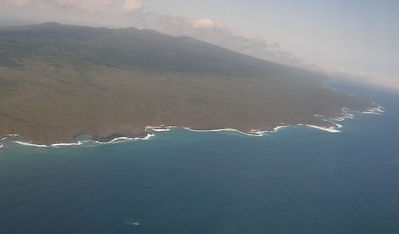
So, things got off to a rough start (the whole drama to be revealed in chapter II of this riveting mini series!)…but with our feet finally on the ground 600 miles away from the Ecuadorian coast, that all faded to the background. We had made it it to one of most unique natural sanctuaries in the world.
We chose to go the road somewhat less traveled by, and stay on the main three islands (Santa Cruz, Isabela and San Cristobal) rather than doing a boat based tour. Emily, as usual, had done quite a bit of research and it seemed the more economic route and also allowed us to do a lot of snorkeling, which is what we were mostly interested in.
Our first stop was Santa Cruz, probably the most touristy of the islands. I’m not sure what I thought the Galapagos would be like, but seeing a small town, agriculture and wide spread human habitation surprised me. It shouldn’t have, because I knew we were staying in hotels on these islands so of course there had to be towns but it was surprising to me nonetheless. Basically there are four large islands that are inhabited, the rest are protected national park which can only be visited by the Galapagos tour/cruise boats and some can be reached by smaller boats from the main islands. I guess I had thought that all the islands were strongly protected, but that is not necessarily the case. The big islands do have large sections of national park, but they also have developed areas as well. While I’m sure we missed a lot by not taking one of the cruise boats, I’m glad we got to see the more human side (both the good and the bad) of the islands as well.
Really, Em and I could go on and on about the Galapagos. Just as an example – Out of curiosity and to provide some background history going into our trip, I decided to read Darwin’s Origin of the Species since the islands were so influential in his work. Interestingly enough, in “Origin†he does not actually spend much time on his Galapagos findings, but it was obvious as we went through the islands how their unique character could have deeply impacted and given credence to his theory. Which is all to say, I could go on for some time about just that and how interesting it was to be able read his theory and see the parallels and inspiration for his theory right before my eyes. But I won’t. Instead I’ll just try to highlight some the things that we most enjoyed about the islands.
-
The wildlife – of course! This is probably the main reason why people come to the islands and even in the areas with human habitation it was amazing to see the difference in how the animals acted as opposed to those on the mainland. You could get disturbingly close to most of the larger animals on the islands. One experience particularly struck me with how unique it was. I was photographing a heron and I just kept getting closer and closer and closer, but the heron hardly even batted an eye. It reminded me a lot of the blue herons I would see sometimes while growing up in Grass Valley. The blue herons back home would have been off flying about fifteen to twenty feet earlier. So, on land and sea, the wildlife was amazing and abundant. Even just walking along the fisher’s pier in Santa Cruz we saw rays, seals and of course all the birds waiting around for fish heads (fish heads, yummy yummy fish heads).
The snorkeling was cold(!), but awesome. Emily’s favorite part of the whole trip was when we were able to swim with a bunch of juvenile sea lions ( video of said romp, click here). They were very curious and playful. One even grabbed her flipper and tried its best to hold on to it. My favorite snorkeling experience was swimming with the Galapagos sharks (“fish are our friends, not food†vegetarian sharks, go figure) and sea turtles.
-
The islands were created by volcanoes, so they are formed from hardened lava. The unusual earth made for some breathtaking and surreal scenery (see the pictures of the lava tunnels). We rode horses up to a volcanic crater on Isabela. The ride there was beautiful and fascinating. The ride back, however, was just painful (sore for days). We also hiked around on lava from a volcano that erupted less than 30 years ago. The vegetation was completely destroyed in some places, so at times it felt like we were on the moon. There are even little pockets where we could feel the steam rising up from underground fissures. The next day we went on a boat/snorkeling trip to one of the most interesting places we have ever been. There were tons of still crystal clear pools of ocean water separated by bridges and walls of lava. The lava rocks were covered in giant ancient cactus . So, you looked into the salt water and could see sea turtles, fish, rays etc. perfectly swimming around in the water and you could look up and walk around on bridges made out of lava and try not to get poked by a cactus needle.
-
The beaches and water – the water is the most beautiful blue and when there is sand it tended to be white. There’s not much more to say about that. Since we were on islands and traveling by boat a lot, we saw a lot of water, but it never got old. Emily’s favorite beach was on San Cristobal where the sea lions made the public beach right in the middle of town their sleeping den. Hundreds of sea lions would climb on to the beach and make quite a scene as they roamed around fighting, playing, looking for their families, snuggling, climbing over each other and generally making a lot of noise. We sat there for at least an hour watching their antics and amazing at how similar to dogs and even people they are.
-
Sushi! So yeah, the only fish I eat is raw. There is a really good sushi restaurant that overlooks the bay in Santa Cruz. We spent a pleasant evening there for my birthday dinner.
-
CEDEI invaders – there were probably about 12 CEDEI teachers on the islands all at once, so we kept bumping into people that we knew. We all had our vacation at the same time, so it makes sense, but it was weird to be in a completely different place and still find a friend to eat dinner with.